
HEC Recognized and Unrecognized Institutions: Check the Official Lists
HEC shares official lists of recognized and unrecognized institutions.
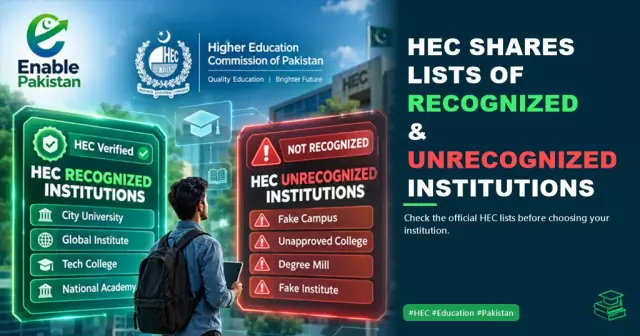
When it comes to HEC recognized and unrecognized institutions, students and parents in Pakistan have plenty of questions. The Higher Education Commission (HEC) has now shared updated, clear lists of recognized and unrecognized degree-awarding institutions. This is a significant step towards protecting the academic future of students across the country.
In this article we break down what the announcement means, who it affects and what you should do next. We also explain how to check an institution's status and which warning signs to look out for. Here is everything you need to know.
What happened with HEC recognized and unrecognized institutions
The Higher Education Commission has shared lists that clearly separate recognized institutions from unrecognized ones. The lists cover degree-awarding institutions. This lets any student check an institution's status before applying.
The aim of the initiative is simple. HEC wants students to make informed decisions and avoid falling victim to degree fraud. Fake or unapproved institutions can cost families years of study and a lot of money, so a clear public list gives students a reliable place to check first.
The message from HEC is also direct. Verify an institution's status before you apply, so you can secure your educational path with confidence.
Why HEC recognized and unrecognized institutions lists matter
A degree is only as useful as the institution that awards it. A degree from an unrecognized institution may not be accepted for jobs, further studies or official attestation. For many families, the loss is not only fees. It is also the time and effort a student puts into the programme.
These lists matter for several reasons. They give students one clear source of truth before they choose where to study. They also make it harder for fake campuses and degree mills to attract students with misleading claims.
- Protects students from fake campuses, unapproved colleges and degree mills
- Saves time, effort and money spent on programmes that may not be valid
- Helps parents choose the right institution with confidence
- Makes the higher education sector more transparent
- Supports students who plan to study further or work abroad
What this means for students
If you are planning to take admission, check the status of the institution first. Do this before you pay any fee, submit documents or accept an offer. A few minutes of checking can protect years of work.
What this means for parents
Parents often make or influence the admission decision. Use the official lists to confirm the institution, and do not rely only on advertisements, agents or word of mouth.
How to check an institution's status
Follow these simple steps before you apply:
- Visit the official HEC website and find the lists of recognized and unrecognized institutions.
- Search for the exact name of the university, college or institute.
- Check whether the campus and the specific programme you want are recognized.
- Compare the name carefully. Fake institutions sometimes use names that are very close to real ones.
- Do not rely only on advertisements, social media posts or agents.
- If you are still unsure, contact HEC directly before paying any fee.
Warning signs of a fake institution
Keep an eye out for these red flags:
- A promise of a very fast degree, or a degree with no attendance or exams
- Pressure to pay fees quickly or to take admission before the last date
- A name that looks almost the same as a well-known university
- No clear campus address, contact details or official website
- A claim of recognition that you cannot find on the official HEC lists
What education advisers generally recommend
Education and career advisers generally recommend checking an institution's official status first, comparing it with the official lists and confirming the details of the programme in writing. They also recommend keeping copies of admission documents and fee receipts. Treat any institution that avoids these questions with caution.
Common mistakes students should avoid
- Trusting an advertisement without checking the official lists
- Checking only the name of the institution and not the campus or programme
- Paying a fee before confirming that the institution is recognized
- Ignoring warning signs because an offer looks cheap or easy
- Not sharing the information with friends and family who are also applying
What happens next
Students are encouraged to check the lists regularly, because the status of institutions can be updated. We will keep following this story and update this article as soon as more details are confirmed.
Our verdict
The lists shared by HEC are a useful and practical tool for every student in Pakistan. Check the official HEC lists before choosing your institution, and help others do the same. A short check today can protect your degree, your time and your money.
Follow @enable_pak for more updates.
#HEC #HigherEducation #Pakistan #DegreeFraud #UniversityStatus #StudentAlert #EnablePakistan #EduNews
Written by
Enable PakistanGet stories like this in your inbox
The day's top stories, every morning. Free, unsubscribe any time.