
HEC Requires Bioethics Approval Before Samples Leave Pakistan
Universities must get bioethics approval before sending human samples abroad.
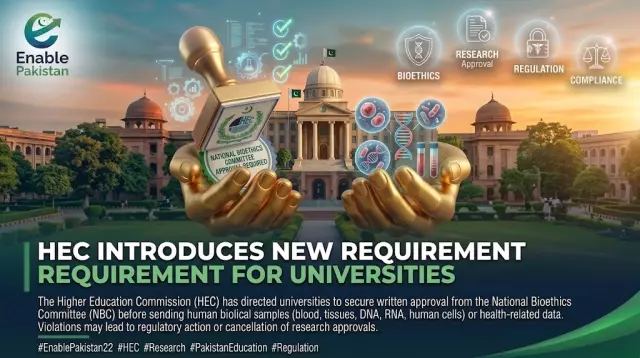
HEC bioethics approval is now a written requirement before any university sends human biological samples or health-related data out of Pakistan. The approval has to come from the National Bioethics Committee.
In this article we set out what must be cleared, and what HEC says can follow if it is not. Here is everything you need to know.
What the HEC bioethics approval covers
The direction is to all universities. It applies before material or data leaves the country. The samples named are blood, tissues, DNA, RNA and human cells. Health-related data is included with the samples, not treated as a separate free pass.
HEC says non-compliance could result in strict regulatory action or the cancellation of ongoing research approvals. The notice in this account does not quote a deadline or a form number.
Why it matters
Human samples and health data are not ordinary lab supplies. A written clearance from the National Bioethics Committee is the step HEC is now putting in front of any transfer abroad.
- The order comes from HEC
- It applies to all universities
- The committee is the National Bioethics Committee
- The items named are blood, tissues, DNA, RNA and human cells
- Health-related data is covered as well
- Research approvals can be cancelled if a university does not comply
What universities should do
- Stop any planned transfer of these samples or this data until written NBC approval is in hand.
- Treat DNA, RNA and cells the same as blood and tissue.
- Include health-related data in the same clearance, not only physical samples.
- Keep the written approval with the project file.
- Do not assume an older research approval covers a new shipment abroad.
What happens next
A circular with the form and the deadline would tell universities how to apply. We will update this article when HEC publishes that process.
Our verdict
HEC bioethics approval from the National Bioethics Committee is now required, in writing, before universities send blood, tissues, DNA, RNA, human cells or health-related data abroad. Skipping it can put ongoing research approvals at risk.
Follow for more updates.
Frequently asked questions
Who must get approval?
All universities, before they send human biological samples or health-related data abroad.
Who gives the approval?
The National Bioethics Committee, in writing.
What material is covered?
Blood, tissues, DNA, RNA and human cells, plus health-related data.
What if a university does not comply?
HEC says that could mean strict regulatory action or cancellation of ongoing research approvals.
Written by
Enable PakistanGet stories like this in your inbox
The day's top stories, every morning. Free, unsubscribe any time.